TMJ Pain: Why Your Jaw Problem Might Be a Posture Problem
Temporomandibular joint (TMJ) dysfunction is one of the most frustrating conditions to live with. The jaw pain, clicking, locking, and facial discomfort can interfere with eating, speaking, and sleep. The associated symptoms — headaches, ear pain, ringing in the ears (tinnitus), neck pain — can significantly impair daily function. And the standard treatments — splints, physical therapy, Botox injections, even surgery — produce variable results that are difficult to predict.
Part of the reason outcomes are so inconsistent is that TMJ dysfunction is frequently treated as an isolated joint problem, when in a substantial proportion of cases, the jaw is not the primary problem at all. The jaw is a downstream consequence of something happening in the cervical spine and in the overall postural structure.
Understanding the Temporomandibular Joint
The temporomandibular joints — one on each side — are the most complex joints in the human body, performing simultaneous hinging and gliding motions during jaw opening and closing. They are unique in that they function as a bilateral joint pair: both TMJs must move in coordinated fashion for normal jaw mechanics.
The joint is formed by the mandibular condyle (the rounded end of the lower jaw) fitting into the mandibular fossa (a depression in the temporal bone of the skull), separated by an articular disc of fibrocartilage. The disc must move in synchrony with the condyle for smooth, pain-free jaw motion. When the disc moves out of coordination with the condyle — either from joint laxity, muscle imbalance, or structural malpositioning — the clicking, popping, and locking that characterize TMJ dysfunction result.
The Cervical-Mandibular Connection
The relationship between cervical spine mechanics and TMJ function is anatomically direct and biomechanically significant — yet it is almost never addressed in standard TMJ treatment.
The key connection operates through several mechanisms:
The Upper Cervical Spine and Jaw Position
The upper cervical spine (C1 and C2) and the TMJ share overlapping neurological pathways. Both regions are innervated by the trigeminal nerve system, which is why cervical problems can produce jaw pain and vice versa. More structurally: the position of C1 and C2 directly influences the position of the base of the skull, which is the "socket" half of the TMJ. When C1 is rotated or tilted, the temporal bones — which house the TMJ sockets — may be asymmetrically positioned.
forward head posture and Mandibular Retrusion
When the head translates forward (forward head posture), the lower jaw tends to retract — to move posteriorly relative to the upper jaw. This retraction compresses the posterior aspect of the TMJ and alters the relationship between the mandibular condyle and the articular disc. Research has documented a consistent relationship between the degree of forward head posture and the prevalence and severity of TMJ dysfunction.
This mechanical relationship is why TMJ symptoms often worsen in periods of increased screen use (which worsens FHP) and improve with postural correction — even without any direct jaw treatment.
The Hyoid Bone Connection
The hyoid bone — a U-shaped bone at the base of the tongue — sits between the jaw and the cervical spine. Muscles connecting it to the jaw and muscles connecting it to the cervical spine compete for its position. When the cervical spine is in forward translation, the hyoid is pulled posteriorly, which affects the mechanics of jaw opening (since the suprahyoid muscles assist in opening the jaw by depressing the mandible). This is why people with severe FHP often notice restricted jaw opening and discomfort when opening widely.
Dura Mater Tension
The dura mater — the outer membrane surrounding the brain and spinal cord — has attachments at the base of the skull and through the cervical spine. Tension in the dural membrane from upper cervical misalignment can create tension at the base of the skull that manifests as headaches, facial pain, and altered sensory function — all symptoms commonly attributed to TMJ dysfunction.
What Causes TMJ Dysfunction: The Full Picture
When TMJ dysfunction is properly assessed in context, the contributing factors typically include some combination of:
Local factors: Disc displacement, condylar asymmetry, joint hypermobility, joint hypomobility, parafunctional habits (bruxism, clenching), occlusal problems (bite discrepancies)
Regional factors: Upper cervical misalignment, forward head posture, cervical muscle hypertonicity — particularly in the suboccipital and sternocleidomastoid muscles
Systemic factors: Estrogen (which affects ligament laxity — explains why TMJ dysfunction is more common in women, particularly around hormonal transitions), systemic inflammatory conditions, psychological stress and its effect on muscle tension
Understanding which factors are driving the dysfunction in a specific individual determines the treatment approach. Treating only the local joint while the regional and systemic drivers remain unaddressed explains why so many TMJ patients cycle through treatments with partial and temporary results.

Symptoms Beyond Jaw Pain
The symptom picture of TMJ dysfunction extends well beyond jaw pain, and recognizing the full syndrome helps understand why posture plays such an important role:
Headaches: Typically beginning at the temple, over the eye, or at the base of the skull. These headaches have both a local TMJ component (from referred pain from the masticatory muscles and joint capsule) and a cervical component (from the suboccipital tension that almost always accompanies FHP-related TMJ dysfunction).
Ear symptoms: Ear pain, fullness, ringing (tinnitus), and occasionally dizziness — often on the side of the more severely affected TMJ. The proximity of the TMJ to the ear canal and the shared tissue connections explain these symptoms.
Facial muscle pain and tension: The masseter, temporalis, and pterygoid muscles — the primary jaw muscles — are almost universally hypertonic in TMJ dysfunction, producing facial aching and tenderness to touch.
Neck and shoulder pain: Nearly universal in TMJ patients with a cervical contributing factor — the upper trapezius and sternocleidomastoid are typically in a state of chronic over-activation.
Changes in bite: As the joint position changes with dysfunction, the bite relationship may shift, producing a sense that the teeth don't fit together properly.
The Structural Approach to TMJ Care
A truly comprehensive approach to TMJ dysfunction addresses both the local joint and the structural factors contributing to it.
Upper cervical assessment and correction is central. C1 and C2 alignment directly influences the skull base mechanics and the neurological environment of the TMJ region. Specific upper cervical adjustments, when indicated, can produce significant and sometimes rapid changes in TMJ symptoms.
Forward head posture correction addresses the fundamental mechanical driver in most posture-related TMJ cases. As the head gradually returns toward its anatomically correct position — above the shoulders rather than forward of them — the mandible progressively decompresses posteriorly, which often reduces TMJ symptoms even without any direct jaw work.
Hyoid and cervical soft tissue work addresses the muscular tension that is maintaining the abnormal jaw position.
Collaboration with dental care when occlusal factors are contributing — the dentist's expertise is essential for managing the bite relationship, splint therapy, and restorative care. The most effective TMJ outcomes typically come from coordinated care between a dental professional managing the intraoral factors and a structural spine professional managing the cervical and postural factors.

Frequently Asked Questions
Q: Should I get a splint for my TMJ?
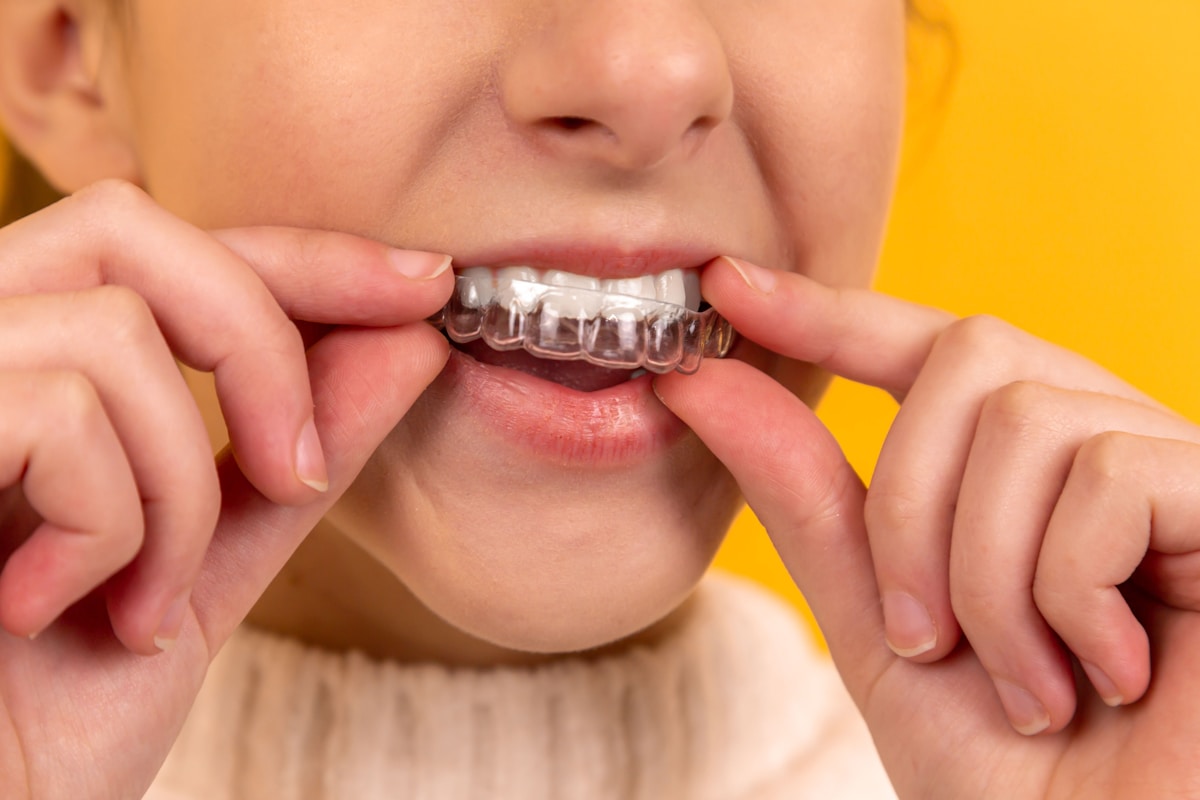
Oral splints (night guards, occlusal appliances) can be genuinely helpful for TMJ dysfunction — particularly by reducing the effects of bruxism and clenching and providing a stable jaw position during sleep. However, they address the symptom and the occlusal component without addressing the cervical and postural contributors. For most people, a splint alone provides partial relief; the complete picture requires addressing the structural spine component as well.
Q: Can stress alone cause TMJ pain?
Psychological stress significantly worsens TMJ dysfunction — primarily through increased masseter and temporalis muscle tension (which many people experience as jaw clenching or teeth grinding, especially during sleep). However, stress is rarely the only factor. It typically acts as an amplifier on an underlying structural vulnerability. People whose cervical and jaw mechanics are structurally sound are generally more resilient to stress-induced TMJ symptoms.
Q: Is TMJ surgery effective?
Surgery (arthrocentesis, arthroscopy, or open joint surgery) is reserved for specific structural joint problems that have not responded to conservative care — disc displacement that cannot be reduced, articular surface damage requiring intervention, or condylar pathology. For the majority of TMJ dysfunction cases, conservative treatment is both effective and preferable. Surgery carries risks and does not address the regional and postural factors contributing to the dysfunction.
Q: Can I treat TMJ pain myself?
Self-care measures that can help include: soft food diet during acute flares (reducing joint loading), jaw muscle stretching and self-massage of the masseter, heat application to reduce muscle spasm, stress reduction practices, and attention to daytime clenching habits. These measures are adjuncts to — not substitutes for — professional assessment and treatment of the underlying structural factors.
Conclusion
TMJ dysfunction is often a structural problem that happens to present in the jaw. The cervical spine, the head position, and the overall postural architecture are intimately connected to how the jaw functions — and treating the jaw without assessing and addressing these connections is why so many people cycle through jaw treatments without lasting relief.
At SPINE-X, we evaluate TMJ dysfunction in its full structural context, with particular attention to upper cervical alignment and forward head posture as primary contributors. In many cases, improving the structural foundation of the cervical spine produces improvements in jaw symptoms that direct jaw treatment alone had been unable to achieve.
Related Reading
- Forward Head Posture: The Modern Epidemic Nobody Is Fixing Correctly
- Facial Asymmetry and Posture: The Connection Most People Never Consider
- The SPINE-X Approach to TMJ: Addressing the Postural Driver of Jaw Dysfunction
Is Your Spine Contributing to Your Symptoms?
Reading about structural problems is one thing — knowing what is actually happening in your spine is another.
Dr. Joy offers a personal Diagnostic Report — send 4 posture photos, and receive a detailed written analysis of your structural findings, postural deviations, and a personalized exercise and correction plan. All delivered as a PDF within 48 hours.
- Postural deviation analysis (anterior, posterior, lateral views)
- Structural findings: curvature, head position, pelvic levelness
- Personalized correction and exercise recommendations
- PDF report you can reference at home
$40 · Remote · Results in 48 hours
Reviewed by Dr. Ji Young Lim, D.C. — 13+ years clinical experience in structural chiropractic